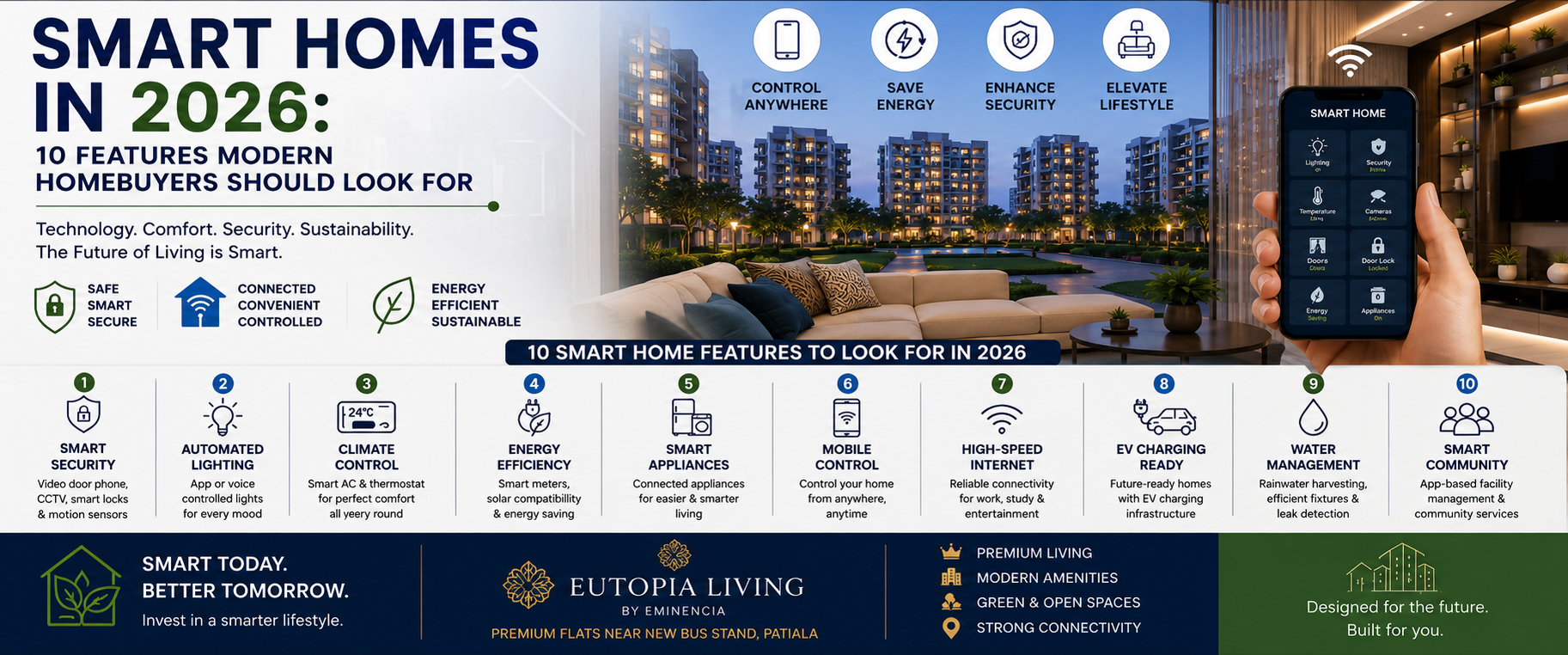
A modern home is no longer defined only by its size, number of bedrooms or location. Smart Homes in 2026 are increasingly shaped by technology, convenience, security and energy efficiency.
From smart security systems and automated lighting to energy-efficient appliances and connected devices, technology is changing the way people live, work and interact with their homes. Homebuyers are now looking for properties that offer greater comfort, convenience and control while supporting a modern lifestyle.
In 2026, buyers are paying closer attention to smart technology, energy efficiency, security, comfort and lifestyle features when choosing a property. The growing demand for connected and sustainable living is also influencing how modern residential communities are designed.
So, what should you look for when choosing a future-ready home?
Here are 10 smart home features worth considering in 2026.
1. Smart Security Systems
Security is one of the most useful applications of smart-home technology.
Modern residential properties can incorporate technologies such as:
- Smart door locks
- Video doorbells
- CCTV monitoring
- Digital access control
- Motion sensors
- Security alerts
- Visitor management systems
These technologies can make it easier for homeowners to monitor access to their property and improve everyday peace of mind.
For apartment communities, technology can also support controlled access to common areas and building entrances.
2. Automated Lighting
Smart lighting can make everyday living more convenient while potentially helping households manage electricity consumption.
Instead of manually switching every light on and off, smart systems can allow homeowners to control lighting through:
- Mobile applications
- Voice commands
- Motion sensors
- Timers
- Automated schedules
For example, lights can be programmed to turn off automatically when nobody is using a particular room.
3. Smart Temperature and Climate Control
Comfort is an important part of modern home design.
Smart thermostats and climate-control systems can help homeowners manage indoor temperatures according to their routines.
Depending on the system, users may be able to:
- Set schedules
- Control temperature remotely
- Monitor energy usage
- Automate cooling
- Adjust settings room by room
This can be particularly useful for families with predictable daily routines.
4. Energy-Efficient Homes
Smart technology is not only about convenience.
Energy efficiency is becoming an increasingly important consideration for homebuyers, with sustainability and green living emerging as major residential trends.
When evaluating a modern home, look for features such as:
- Energy-efficient lighting
- Efficient appliances
- Natural ventilation
- Better insulation
- Solar-energy compatibility
- Energy monitoring
- Water-saving fixtures
A home designed with energy efficiency in mind can potentially reduce resource consumption over the long term.
5. Smart Appliances
Connected appliances are becoming increasingly common.
Depending on the home and budget, smart appliances may include:
- Refrigerators
- Washing machines
- Air conditioners
- Ovens
- Water heaters
- Robot vacuum cleaners
Many connected appliances can be monitored or controlled through smartphones.
The objective isn’t simply to have more technology. The better approach is to choose technology that genuinely makes daily tasks easier.
6. Smart Home Control From Your Phone
One of the biggest advantages of a connected home is centralized control.
A homeowner may be able to control multiple functions through a smartphone, including:
Lights → Security → Air Conditioning → Appliances → Entertainment
This can be particularly useful when you are away from home.
For example, you could check whether certain devices are switched off or monitor your home’s security remotely.
7. High-Speed Internet Infrastructure
A smart home is only as useful as its connectivity.
Many modern households now depend on reliable internet for:
- Work from home
- Video calls
- Streaming
- Online education
- Smart security
- Connected appliances
- Entertainment
Therefore, buyers should consider internet availability and network infrastructure when evaluating a new apartment.
A future-ready home should be able to support multiple connected devices without creating unnecessary connectivity problems.
8. EV-Friendly Infrastructure
Electric vehicles are becoming an increasingly visible part of India’s mobility landscape.
For homebuyers, this creates another consideration:
Does the residential community support EV charging?
Buyers should ask whether the project provides:
- Dedicated EV charging points
- Electrical infrastructure for future charging
- Parking suitable for EV owners
- Charging access for residents
Even if you do not currently own an electric vehicle, EV-ready infrastructure can become useful in the future.
9. Water Management Technology
Water efficiency is another area where technology can contribute to smarter residential living.
Modern developments can incorporate systems designed to improve water management, such as:
- Rainwater harvesting
- Water-efficient fixtures
- Leak detection
- Water monitoring
- Efficient irrigation systems
- Wastewater treatment
These features can support more sustainable communities while helping reduce unnecessary water consumption.
10. Smart Community Living
Smart living is not limited to the inside of an apartment.
The next generation of residential developments is increasingly focused on creating connected communities rather than simply constructing individual homes.
This can include:
- Digital visitor management
- App-based facility management
- Community announcements
- Online maintenance requests
- Clubhouse booking
- Digital parking management
- Security notifications
- Community events
This combination of technology and lifestyle can make residential communities more convenient for families.
Smart Home vs Traditional Home
Does every home need smart technology?
Not necessarily.
The objective should not be to fill a home with gadgets. Instead, buyers should identify technology that provides genuine value.
The best smart home is not necessarily the one with the most technology.
It is the one where technology makes everyday living simpler, safer and more efficient.
Are Smart Homes Worth It in 2026?
For many homeowners, smart-home technology can provide meaningful benefits.
The biggest advantages include:
Convenience
Control multiple devices and systems more easily.
Security
Connected cameras, locks and sensors can improve monitoring.
Energy Efficiency
Smart systems can help households understand and manage energy consumption.
Accessibility
Automated systems can make certain daily tasks easier for older adults and people with mobility limitations.
Future Readiness
Technology-friendly infrastructure can make it easier to adopt new devices and services later.
However, buyers should also consider the cost, maintenance, compatibility and privacy implications of connected devices.
What Should Homebuyers Ask a Developer?
If you are purchasing a new apartment, don’t simply ask:
“Is this a smart home?”
Ask more specific questions:
- Which smart features are actually included?
- Are smart devices included in the base price?
- Is there an additional technology or maintenance charge?
- Which systems can be controlled through an app?
- Is EV charging infrastructure available?
- What internet infrastructure is provided?
- Are security systems installed throughout the community?
- Can smart devices be upgraded later?
- Who maintains the technology after possession?
- What happens if the technology provider changes?
These questions can help you understand whether a project is genuinely technology-enabled or simply using “smart home” as a marketing term.
Smart Homes in 2026 and Premium Residential Communities
Technology is becoming part of a larger shift in what buyers expect from premium housing.
Modern buyers increasingly consider lifestyle, wellness, green spaces, security, convenience and community amenities alongside the apartment itself. Industry outlooks for 2026 indicate that premium housing and lifestyle-led residential developments continue to attract strong attention.
This means the future of premium housing is not simply about having a larger apartment.
It is about creating a better overall living experience.
How Eutopia Living Fits Into Modern Residential Living
For buyers exploring premium apartments in Patiala, Eutopia Living by Eminencia presents a modern residential-community concept near the New Bus Stand.
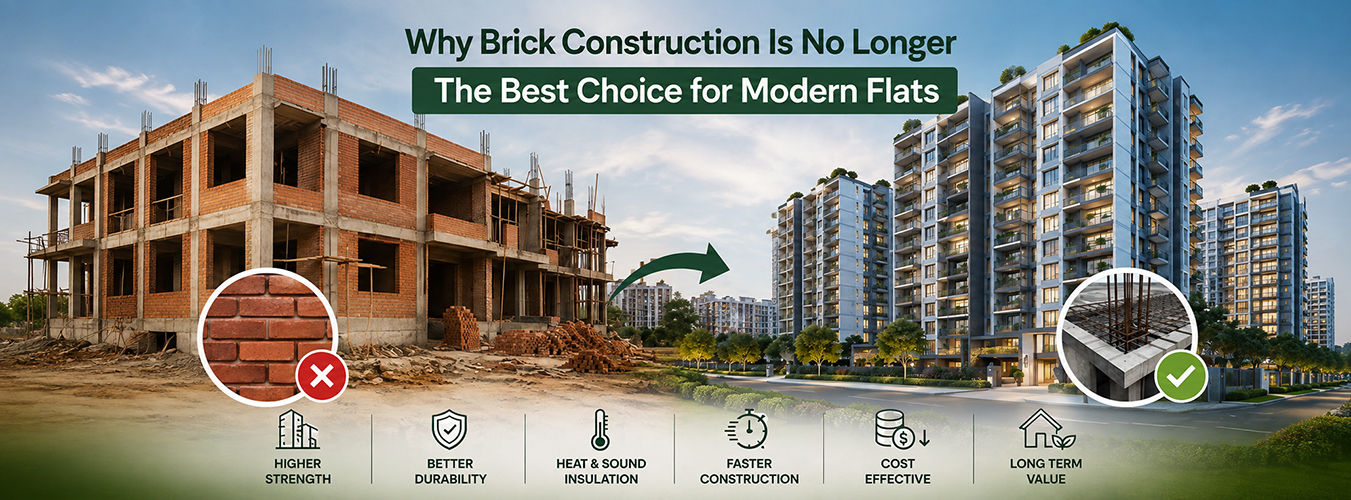
The project’s website highlights a 10-acre development with multiple residential configurations, green and open spaces, sports facilities and MIVAN construction technology.
However, buyers should distinguish between smart-home features specifically included in a project and broader modern-community amenities. Always confirm the latest specifications and inclusions directly with the developer before making a purchase.
The Future of Homes in Patiala
As residential preferences evolve, homebuyers are likely to look beyond basic specifications.
The future home may combine:
Smart Technology + Green Living + Security + Wellness + Connectivity + Community
For cities such as Patiala, this shift creates an opportunity for new residential developments to offer more modern and experience-focused living environments.
The important thing for buyers is to focus on technology that provides real value rather than simply choosing a property because it has the word “smart” in its marketing.
Final Thoughts
Smart homes are becoming an increasingly important part of modern residential living.
From security and lighting to energy management, EV infrastructure and digital community services, technology can make homes more convenient and efficient.
But technology should complement a good home—not replace the fundamentals.
When choosing a property in 2026, consider the complete picture:
Location + Construction Quality + Connectivity + Sustainability + Amenities + Technology + Long-Term Value
A future-ready home is ultimately one that can adapt to the way you and your family will live tomorrow.
Frequently Asked Questions
What is a Smart Homes in 2026?
A smart home uses connected devices and technology to automate or remotely control functions such as lighting, security, temperature, appliances and access.
Are smart homes expensive?
The cost depends on the number and type of systems installed. Some features are relatively affordable, while comprehensive automation systems can require a larger investment.
Are smart homes energy efficient?
Smart technology can help monitor and control energy consumption, but actual savings depend on the devices, settings and how residents use them.
What is the most useful Smart Homes in 2026 feature?
Security, lighting automation, climate control and centralized mobile control are among the most practical features for many households.
Should I buy a smart home in 2026?
If the technology genuinely improves convenience, security or efficiency and fits your budget, it can be a worthwhile consideration. However, always evaluate the property’s location, construction quality, documentation and overall value first.