Buying a flat is a significant financial commitment, but the expenses of home ownership do not end after the purchase and registration are complete. Property owners may also need to pay property tax and other applicable local charges.
If you are planning to buy a flat in Patiala or already own an apartment in Punjab, understanding property tax can help you plan your household budget and avoid missing important payment deadlines.
In this guide, we explain what property tax is, who may need to pay it, how it is assessed and what apartment owners should check before making a payment.
What Is Property Tax in Punjab?
Property tax in Punjab is a local tax imposed on eligible properties by the relevant municipal or local authority under applicable rules.
The revenue collected can support municipal services and urban infrastructure, depending on the authority’s responsibilities and budget.
Residential properties, including houses and apartments, may be subject to property tax according to the rules applicable to their location and category.
The applicable amount and assessment method can differ between municipal areas. Therefore, property owners should check the current requirements with the authority responsible for their property.
Who Needs to Pay Property Tax?
Property tax obligations depend on the applicable local rules and the circumstances of the property.
Generally, owners of taxable residential properties may be responsible for ensuring that the applicable tax is paid.
Before purchasing a flat, clarify the following:
- Whether the property is already assessed for property tax
- Whether any previous tax remains unpaid
- Which local authority is responsible for the property
- Whether the apartment has a separate property-tax assessment
- How responsibility for payments is handled under the sale agreement
If you are purchasing a newly constructed apartment, ask the developer which property-related charges are included in the quoted price and which may become your responsibility later.
How Is Property Tax Calculated?
There is no single calculation that should automatically be applied to every residential property across Punjab.
The assessment method can depend on the relevant municipal authority, property category and the rules currently in force.
Depending on the applicable system, factors may include:
- Property location
- Property type
- Covered or built-up area
- Use of the property
- Applicable assessment category
- Government or municipal valuation criteria
Some authorities may use a prescribed assessment formula rather than simply charging a fixed percentage of the property’s purchase price.
For this reason, do not estimate your annual property tax solely from the advertised apartment price or the amount paid for registration.
Contact the relevant municipal authority to confirm the assessment method and applicable rate for your property.
Property Tax in Patiala
If your apartment is located within the jurisdiction of Patiala Municipal Corporation, check the current property-tax rules, payment options and assessment requirements directly with the corporation.
Properties outside the corporation’s jurisdiction may fall under a different local authority, so it is important to confirm which office is responsible for your address.
When checking property tax in Patiala, keep the following information available:
- Complete property address
- Owner’s name
- Property identification or assessment number, if available
- Property type
- Relevant ownership documents
- Previous tax receipt, if applicable
These details can help the responsible authority identify the property and explain the amount payable.
How to Check and Pay Property Tax
The available process depends on the local authority responsible for the property.
In general, apartment owners can follow these steps:
Step 1: Identify the Responsible Authority
Confirm whether the property falls under a municipal corporation, municipal council or another local authority.
Step 2: Locate the Property Record
Use the official portal or visit the relevant office to identify the property-tax record. You may need the property identification number or other ownership details.
Step 3: Check the Outstanding Amount
Review the assessed tax, outstanding balance, previous payments and any applicable late-payment charges.
If the amount appears incorrect, contact the authority before proceeding.
Step 4: Make Payment Through an Authorized Channel
Use the official payment facility where available or follow the payment instructions issued by the relevant authority.
Avoid making payments through unverified websites or individuals.
Step 5: Keep the Receipt
Save the payment confirmation and receipt. These records can help resolve future disputes and demonstrate that the payment was made.
What Documents Should Property Owners Keep?
Maintaining property records can make tax payments and future property transactions easier.
Useful documents may include:
- Sale deed or other ownership documents
- Property identification or assessment details
- Previous property-tax receipts
- Identity documents, where required
- Property address and ownership information
- Relevant municipal correspondence
- Payment confirmations and challans
The exact documents required depend on the authority and the service being requested.
What Happens If Property Tax Is Not Paid?
Failure to pay property tax within the required period may result in consequences under the applicable local rules.
These may include outstanding dues, late-payment charges, penalties or other recovery measures where legally applicable.
If you discover unpaid property tax on a property you own or plan to purchase, ask the responsible authority for an official statement of outstanding dues and instructions for resolving the matter.
Do not rely only on informal assurances that all payments are clear.
Property Tax Checks Before Buying a Flat
Before finalizing a residential property purchase, include local tax verification in your due-diligence process.
Ask the seller or developer:
- Has the property been assessed for applicable property tax?
- Are there any outstanding property-tax dues?
- Which authority is responsible for collecting the tax?
- Is the property recorded under the correct ownership and address details?
- Are previous payment receipts available?
- When will responsibility for future payments transfer to the buyer?
- Are any additional local charges applicable?
The answers may vary depending on whether you are buying a resale apartment or a newly developed property.
For a resale property, request available tax receipts and verify outstanding dues independently.
For a new apartment, ask the developer how the property’s assessment and tax responsibilities are handled.
Property Tax and Other Costs of Apartment Ownership
Property tax is only one part of the ongoing cost of owning a flat.
You should also consider other expenses that may apply, such as:
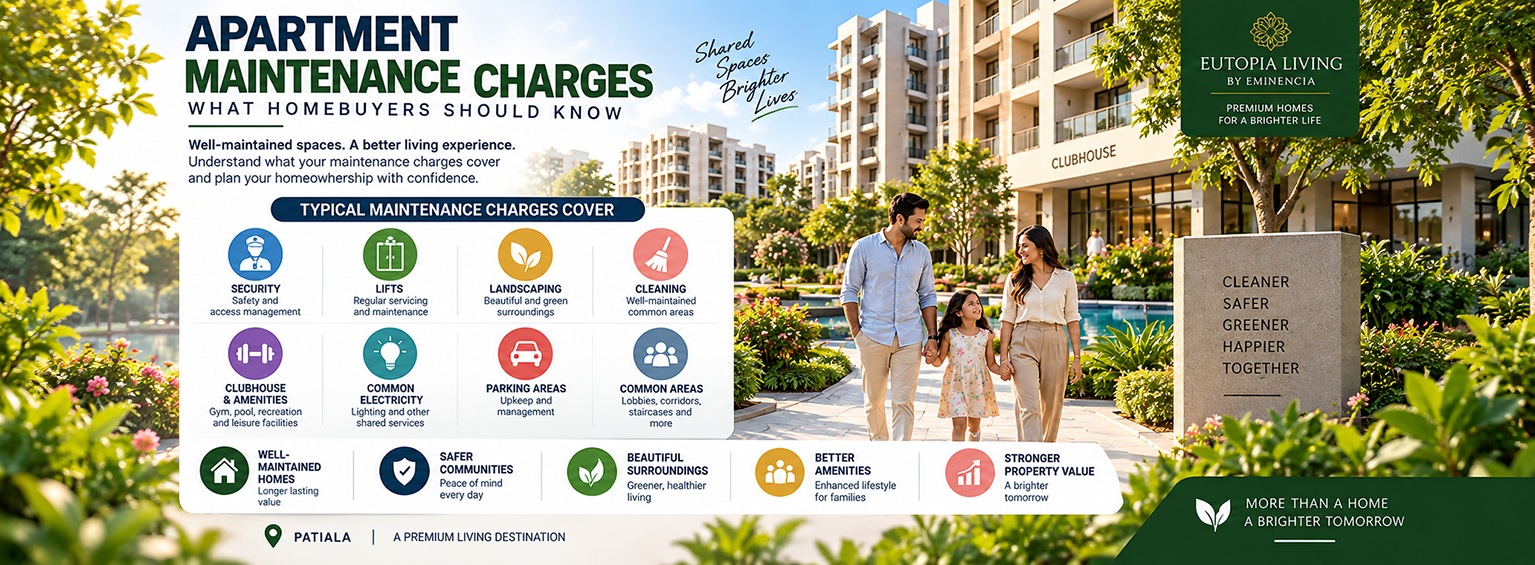
- Apartment maintenance charges
- Water and electricity bills
- Home insurance, if purchased
- Repairs and replacements
- Parking-related charges, where applicable
- Community or facility-related charges under the agreement
These expenses are separate from the initial purchase price and registration costs.
Creating an annual homeownership budget can help you plan for both regular payments and unexpected repairs.
Buying a Flat in Patiala? Plan Beyond the Purchase Price
When comparing residential properties in Patiala, look at the complete financial picture rather than focusing only on the advertised price.
Consider the apartment’s purchase cost, applicable registration expenses, financing, ongoing maintenance and local property-tax obligations.
For buyers considering Eutopia Living by Eminencia, request the latest cost details from the project team and clarify which charges are included in the quoted price. Verify the property’s applicable tax arrangements with the relevant local authority rather than assuming that every charge is included.
Final Thoughts
Property tax is an important consideration for residential property owners in Punjab. Understanding which authority is responsible, how your property is assessed and how payments are recorded can help you manage your responsibilities more confidently.
Before buying a flat, check the property’s tax status and ask about any outstanding dues. After purchase, keep your ownership details and payment receipts organized, and follow the applicable payment schedule.
A little preparation can help make property ownership more transparent and easier to manage.
Frequently Asked Questions
Is property tax applicable to flats in Punjab?
Residential flats may be subject to property tax depending on the applicable local rules and the property’s location and classification. Confirm the requirements with the responsible authority.
How can I check property tax in Patiala?
First, confirm which local authority is responsible for your property’s address. Then use its official portal or contact the relevant office to check the assessment and outstanding dues.
Is property tax included in the flat purchase price?
Not necessarily. Property tax and other recurring charges may be separate from the apartment’s purchase price. Check your sale agreement and obtain clarification in writing.
What should I do if property tax is unpaid?
Request an official statement of outstanding dues from the responsible authority and follow its instructions for payment or resolution.
Should I check property tax before buying a resale flat?
Yes. Ask for previous receipts, check outstanding dues and confirm the property’s assessment details before completing the transaction.