In this guide, we’ll explain each term in simple language with practical examples.
What is Carpet Area?
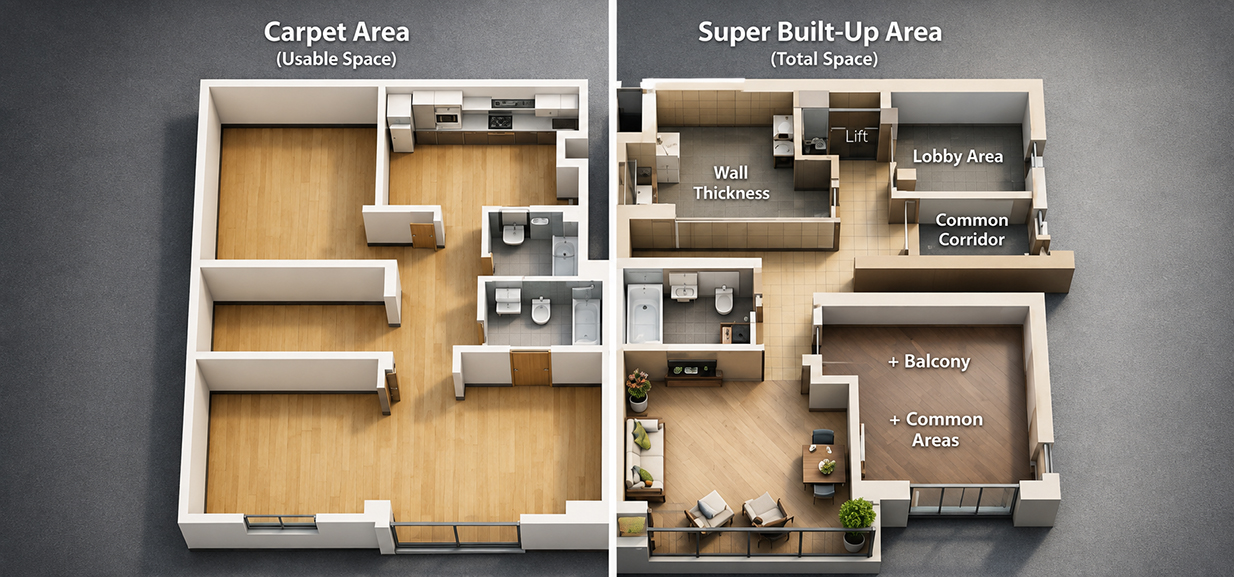
When comparing carpet area vs built-up area vs super area, the first measurement you should understand is the carpet area. It refers to the actual usable space inside your apartment, including the bedrooms, living room, kitchen, bathrooms, and internal passages. Simply put, it is the space where you can comfortably live and even lay a carpet.
Carpet area is the actual usable area inside your apartment.It includes the space where you can comfortably place furniture and move around.
Carpet Area Includes:
- Bedrooms
- Living Room
- Dining Area
- Kitchen
- Bathrooms
- Internal Passage
Carpet Area Does NOT Include:
- External Walls
- Balconies
- Terrace
- Common Areas
- Lift Lobby
- Staircase
Think of carpet area as the space where you could actually lay a carpet inside your home.
What is Built-up Area?
Built-up area is larger than carpet area.
It includes:
- Carpet Area
- Internal Walls
- External Walls
- Balcony
This gives a better idea of the total constructed space belonging to your apartment.
What is Super Area?
Super area is the area usually mentioned in brochures and advertisements.
It includes:
- Built-up Area
- Share of Common Areas
Common areas may include:
- Lift Lobby
- Staircases
- Clubhouse (where applicable)
- Corridors
- Common Entrance
- Shared Facilities
This is often called the saleable area because it represents the area on which the property’s price is commonly calculated.
Understanding the Difference
Real Example
Let’s use an apartment example.
This means:
- You can actually use 820 sq.ft.
- The apartment occupies 1,095 sq.ft. including walls and balcony.
- The advertised size is 1,350 sq.ft., which includes your proportionate share of common facilities.
Understanding this difference helps you compare apartments more accurately.
Why is Carpet Area Important?
Carpet area tells you how much usable living space you’ll actually have.
For buyers, it’s often the most practical measurement because it reflects the space you’ll use every day.
When comparing two apartments with similar advertised sizes, checking the carpet area can reveal which one offers better usable space.
Why Do Builders Mention Super Area?
Developers commonly advertise super area because it represents the total saleable area, including a proportionate share of common facilities.
When comparing projects, always ask for:
- Carpet Area
- Built-up Area (if available)
- Super Area
This gives you a complete understanding of the apartment size.
Which Area Should You Compare?
When comparing different projects:
✅ Compare Carpet Area
Also check:
- Floor Plan
- Layout Efficiency
- Balcony Size
- Room Dimensions
- Space Utilisation
A well-designed apartment with a slightly smaller super area can sometimes provide more usable living space than a larger apartment with a less efficient layout.
Common Mistakes Buyers Make
Many buyers:
❌ Compare only the super area.
❌ Ignore the carpet area.
❌ Don’t check room sizes.
❌ Assume bigger super area always means more usable space.
Always review the floor plan before making a decision.
Tips Before Booking a Flat
Before booking, ask the sales team for:
- Carpet Area
- Built-up Area
- Super Area
- Floor Plan
- Balcony Measurements
- Room Sizes
These details will help you compare different apartments fairly.
Frequently Asked Questions
Which area is the actual usable space?
The carpet area represents the actual usable space inside the apartment.
Why is the super area larger?
Super area includes the apartment’s built-up area along with a proportionate share of common spaces such as corridors, lobbies, and other shared facilities.
Which area should I compare when buying a flat?
Compare the carpet area along with the floor plan and room dimensions to better understand the usable space.
Is a larger super area always better?
Not necessarily. A well-planned apartment with a higher carpet area efficiency may offer more practical living space than a larger apartment with a less efficient layout.
Conclusion
Understanding the difference between carpet area, built-up area, and super area helps you make smarter property decisions.
Before booking any apartment, don’t just look at the advertised size. Review the floor plan, compare the carpet area, and understand what is included in the super area. A little research today can help you choose a home that offers better value and suits your family’s needs.
* 2 BHK Flats in Patiala
* 3 BHK Flats in Patiala
* 3+1 BHK Unit Plan
* Luxury Flats in Patiala
* Apartments in Patiala
* 2 BHK vs 3 BHK